0
0

Treating Tribes and Counties as Good Neighbors Act

2/5/2024, 11:45 AM

Summary of Bill HR 1450

Bill 118 hr 1450, also known as the Treating Tribes and Counties as Good Neighbors Act, aims to improve communication and cooperation between Native American tribes and local counties. The bill recognizes the importance of tribal sovereignty and seeks to establish a framework for collaboration on issues such as law enforcement, land management, and economic development.

Specifically, the bill requires tribal governments and county governments to enter into agreements outlining how they will work together on shared priorities. These agreements must address issues such as public safety, emergency response, and natural resource management. The bill also provides funding for training programs to help tribal and county officials better understand each other's perspectives and work together more effectively.

Overall, the Treating Tribes and Counties as Good Neighbors Act is designed to foster positive relationships between tribes and counties, leading to improved outcomes for both communities. By promoting cooperation and understanding, the bill aims to create a more harmonious and productive relationship between tribal and county governments.

Congressional Summary of HR 1450

Treating Tribes and Counties as Good Neighbors Act

This bill revises the Good Neighbor Authority program to modify the treatment of revenue from timber sale contracts under good neighbor agreements with the Department of Agriculture (USDA) and the Department of the Interior. (The Good Neighbor Authority permits USDA and Interior to enter into cooperative agreements or contracts with states, counties, and Indian tribes to perform forest, rangeland, and watershed restoration services on federal land managed by the Forest Service or the Bureau of Land Management.)

Specifically, the bill (1) requires Indian tribes and counties to retain revenue generated from timber sales under a good neighbor agreement; and (2) allows states, counties, and Indian tribes to use such revenue for authorized restoration projects on nonfederal lands under a good neighbor agreement. (Under current law, only a state is permitted to retain the revenues, and the revenues must be used for restoration projects on federal land.)

The bill also extends the Good Neighbor Authority program's expiration date to the end of FY2028; the program currently expires at the end of FY2023.
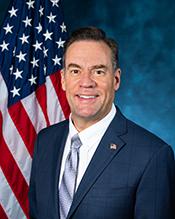
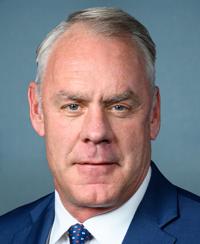
Current Status of Bill HR 1450

Bill HR 1450 is currently in the status of Bill Introduced since March 8, 2023. Bill HR 1450 was introduced during Congress 118 and was introduced to the House on March 8, 2023.  Bill HR 1450's most recent activity was Received in the Senate and Read twice and referred to the Committee on Agriculture, Nutrition, and Forestry. as of September 18, 2023

Bipartisan Support of Bill HR 1450

Total Number of Sponsors
1
Democrat Sponsors
0
Republican Sponsors
1
Unaffiliated Sponsors
0
Total Number of Cosponsors
18
Democrat Cosponsors
12
Republican Cosponsors
6
Unaffiliated Cosponsors
0

Policy Area and Potential Impact of Bill HR 1450

Primary Policy Focus

Agriculture and Food

Potential Impact Areas

- Federal-Indian relations
- Forests, forestry, trees
- Indian lands and resources rights
- Intergovernmental relations
- Land use and conservation
- State and local finance
- State and local government operations
- Watersheds

Alternate Title(s) of Bill HR 1450

Treating Tribes and Counties as Good Neighbors Act
To amend the Agricultural Act of 2014 to modify the treatment of revenue from timber sale contracts and certain payments made by counties to the Secretary of Agriculture and the Secretary of the Interior under good neighbor agreements, and for other purposes.

Comments

Latest Bills

To amend title III of the Public Health Service Act to ensure that Federally-qualified health centers are not required to pay more than the 340B ceiling price for covered outpatient drugs at the time of purchase.
Bill HR 7391February 11, 2026
To amend the Consolidated Farm and Rural Development Act to reauthorize certain water infrastructure grants, and for other purposes.
Bill HR 7476February 11, 2026
To direct the Administrator of the Federal Emergency Management Agency to submit a monthly report on the status of all projects and activities funded through the Disaster Relief Fund, and for other purposes.
Bill HR 7461February 11, 2026
Electing a Member to a certain standing committee of the House of Representatives.
Bill HRES 1048February 11, 2026
To amend the Internal Revenue Code of 1986 to allow certain distributions from long-term qualified tuition programs for first home purchases, and for other purposes.
Bill HR 7468February 11, 2026
To authorize civil actions against institutions of higher education and athletic associations that negligently or recklessly permit a biologically male student athlete to compete in an athletic competition intended exclusively for female student athletes, resulting in harm.
Bill HR 7368February 11, 2026
ROUTE Act
Bill HR 6642February 11, 2026
To amend section 477 of the Social Security Act to increase the maximum education and training voucher amount and provide greater support for foster youth pursuing postsecondary education.
Bill HR 7463February 11, 2026
Recognizing the cultural and historical significance of Mardi Gras and the celebration's origins in Mobile, Alabama.
Bill HRES 1051February 11, 2026
Home School Graduation Recognition Act
Bill HR 6392February 11, 2026