0
0

To amend the Immigration and Nationality Act to reform temporary protected status, and for other purposes.

2/6/2025, 9:06 AM

Summary of Bill HR 696

Bill 119 HR 696, also known as the Temporary Protected Status (TPS) Reform Act, aims to make changes to the Immigration and Nationality Act in order to improve the TPS program. The TPS program allows individuals from designated countries experiencing ongoing armed conflict, environmental disaster, or other extraordinary conditions to temporarily live and work in the United States.

The bill proposes several key reforms to the TPS program. Firstly, it seeks to provide a pathway to permanent residency for TPS holders who have been in the United States for a certain number of years. This would allow individuals who have been living and working in the US under TPS status to apply for permanent residency and eventually citizenship.

Additionally, the bill aims to streamline the TPS application process and make it easier for individuals to apply for and renew their TPS status. It also includes provisions to protect TPS holders from deportation and provide them with access to certain benefits and services. Overall, the Temporary Protected Status Reform Act seeks to improve the TPS program and provide greater stability and security for individuals who have been living and working in the United States under TPS status.

Congressional Summary of HR 696

End Unaccountable Amnesty Act

This bill revises, restricts, and repeals various laws and programs addressing the admissibility and deportability of certain non-U.S. nationals (aliens under federal law). The bill includes changes to the Temporary Protected Status (TPS) program, the treatment of unaccompanied children, and removal proceedings.

Under current law, the Department of Homeland Security (DHS) may grant a foreign state Temporary Protected Status (TPS), which protects qualified nationals of that foreign state from removal from the United States. The bill instead requires an act of Congress to grant TPS to a foreign state. The bill limits TPS status to 12 months, subject to extension.

The bill also generally requires the return of unaccompanied inadmissible children to their country of nationality or last habitual residence, among other changes. Under current law, DHS is authorized (not required) to return these children, and only if their country of nationality or last habitual residence is contiguous to the United States.

The bill also repeals the law allowing for the cancellation of removal or adjustment of the immigration status of qualifying non-U.S. nationals. 

Under the bill, certain forms of identification, including a Notice to Appear issued by DHS, are no longer valid documents for purposes of airport security checkpoints.

The bill also limits the ability of DHS to grant parole (temporary admission granted on a case-by-case basis). For example, the bill limits the granting of parole to a list of specific situations, such as the imminent death of a close family member.
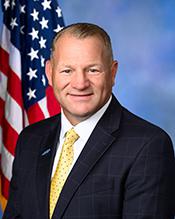

Current Status of Bill HR 696

Bill HR 696 is currently in the status of Bill Introduced since January 23, 2025. Bill HR 696 was introduced during Congress 119 and was introduced to the House on January 23, 2025.  Bill HR 696's most recent activity was Referred to the Committee on the Judiciary, and in addition to the Committees on Homeland Security, and Transportation and Infrastructure, for a period to be subsequently determined by the Speaker, in each case for consideration of such provisions as fall within the jurisdiction of the committee concerned. as of January 23, 2025

Bipartisan Support of Bill HR 696

Total Number of Sponsors
3
Democrat Sponsors
0
Republican Sponsors
3
Unaffiliated Sponsors
0
Total Number of Cosponsors
9
Democrat Cosponsors
0
Republican Cosponsors
9
Unaffiliated Cosponsors
0

Policy Area and Potential Impact of Bill HR 696

Primary Policy Focus

Alternate Title(s) of Bill HR 696

To amend the Immigration and Nationality Act to reform temporary protected status, and for other purposes.

Comments

Latest Bills

To amend title III of the Public Health Service Act to ensure that Federally-qualified health centers are not required to pay more than the 340B ceiling price for covered outpatient drugs at the time of purchase.
Bill HR 7391February 11, 2026
To amend the Consolidated Farm and Rural Development Act to reauthorize certain water infrastructure grants, and for other purposes.
Bill HR 7476February 11, 2026
To direct the Administrator of the Federal Emergency Management Agency to submit a monthly report on the status of all projects and activities funded through the Disaster Relief Fund, and for other purposes.
Bill HR 7461February 11, 2026
Electing a Member to a certain standing committee of the House of Representatives.
Bill HRES 1048February 11, 2026
To amend the Internal Revenue Code of 1986 to allow certain distributions from long-term qualified tuition programs for first home purchases, and for other purposes.
Bill HR 7468February 11, 2026
To authorize civil actions against institutions of higher education and athletic associations that negligently or recklessly permit a biologically male student athlete to compete in an athletic competition intended exclusively for female student athletes, resulting in harm.
Bill HR 7368February 11, 2026
ROUTE Act
Bill HR 6642February 11, 2026
To amend section 477 of the Social Security Act to increase the maximum education and training voucher amount and provide greater support for foster youth pursuing postsecondary education.
Bill HR 7463February 11, 2026
Recognizing the cultural and historical significance of Mardi Gras and the celebration's origins in Mobile, Alabama.
Bill HRES 1051February 11, 2026
Home School Graduation Recognition Act
Bill HR 6392February 11, 2026