0
0

SEWER Act

2/26/2025, 5:23 AM

Summary of Bill HR 766

Bill 119 hr 766, also known as the Infectious Disease Detection and Monitoring Act, aims to amend the Public Health Service Act to enhance the detection and monitoring of infectious diseases through wastewater. The bill requires the Secretary of Health and Human Services to provide grants, contracts, or cooperative agreements to eligible entities for the establishment, maintenance, or improvement of activities related to detecting and monitoring infectious diseases in wastewater.

The primary goal of this legislation is to strengthen public health emergency preparedness and response efforts by utilizing wastewater as a tool for early detection of infectious diseases. By monitoring wastewater, health officials can identify potential outbreaks and take proactive measures to prevent the spread of diseases within communities.

In addition to enhancing disease surveillance, the bill also aims to improve coordination and communication among federal, state, and local health agencies. By providing funding for research, training, and infrastructure development, the legislation seeks to build a more robust and effective system for detecting and responding to infectious disease threats. Overall, Bill 119 hr 766 represents a proactive approach to public health by leveraging innovative technologies and strategies to enhance our ability to detect and monitor infectious diseases. By investing in wastewater-based surveillance, the legislation aims to improve our readiness to respond to public health emergencies and protect the health and safety of all Americans.

Congressional Summary of HR 766

Surveilling Effluent Water for Epidemic Response Act or the SEWER Act

This bill provides statutory authority for the Centers for Disease Control and Prevention (CDC) National Wastewater Surveillance System (NWSS) program, which detects and monitors pathogens in wastewater. It requires the CDC to expand and intensify the activities of the NWSS, including with respect to SARS-CoV-2 (the virus that causes COVID-19), influenza, mpox, dengue, West Nile virus, and respiratory syncytial virus (RSV). 

The NWSS provides funding and guidance to public health departments for wastewater surveillance activities. Under the NWSS, health departments and other partners coordinate on wastewater surveillance at sampling sites and share data with the CDC. The NWSS was initially implemented to monitor SARS-CoV-2 and has since expanded to include influenza A, avian influenza A, mpox, and RSV.     
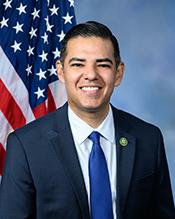
Current Status of Bill HR 766

Bill HR 766 is currently in the status of Bill Introduced since January 28, 2025. Bill HR 766 was introduced during Congress 119 and was introduced to the House on January 28, 2025.  Bill HR 766's most recent activity was Referred to the House Committee on Energy and Commerce. as of January 28, 2025

Bipartisan Support of Bill HR 766

Total Number of Sponsors
2
Democrat Sponsors
2
Republican Sponsors
0
Unaffiliated Sponsors
0
Total Number of Cosponsors
1
Democrat Cosponsors
0
Republican Cosponsors
1
Unaffiliated Cosponsors
0

Policy Area and Potential Impact of Bill HR 766

Primary Policy Focus

Alternate Title(s) of Bill HR 766

To amend the Public Health Service Act to require the Secretary to award grants, contracts, or cooperative agreements to eligible entities to establish, maintain, or improve activities related to the detection and monitoring of infectious diseases through wastewater for public health emergency preparedness and response purposes, and for other purposes.

Comments

Latest Bills

To authorize the Secretary of Education, in collaboration with the Secretary of Health and Human Services, to establish an interagency advisory Commission on Advancing Restorative Justice in Elementary and Secondary Education, and for other purposes.
Bill HR 8360April 17, 2026
To amend the Higher Education Act of 1965 to remove all adverse credit history related to a loan from the credit history of a borrower who has rehabilitated the loan.
Bill HR 8361April 17, 2026
To reauthorize the YouthBuild program, and for other purposes.
Bill HR 8333April 17, 2026
To raise the Foreign Service mandatory retirement age by aligning it with the Social Security Full Retirement Age, and for other purposes.
Bill HR 8346April 17, 2026
To amend the FISA Amendments Act of 2008 to extend the authorities of title VII of the Foreign Intelligence Surveillance Act of 1978 through April 30, 2026, and for other purposes.
Bill HR 8322April 17, 2026
To amend title II of the Social Security Act to repeal the retirement earnings test, and for other purposes.
Bill HR 8344April 17, 2026
To amend section 133 of title 23, United States Code, to remove a certain State funding set-aside for transportation alternative programs, and for other purposes.
Bill HR 8349April 17, 2026
To amend title XI of the Social Security Act to require the Center for Medicare and Medicaid Innovation to test a model to reduce chronic diseases by using accountable produce is medicine.
Bill HR 8355April 17, 2026
To amend the Federal Food, Drug, and Cosmetic Act to enhance drug manufacturing amount information reporting, and for other purposes.
Bill HR 8339April 17, 2026
Supporting the designation of the week of April 11 through April 17, 2026, as "Black Maternal Health Week", founded by Black Mamas Matter Alliance, Inc. (BMMA), to bring national attention to the maternal and reproductive health crisis in the United States and the importance of reducing maternal mortality and morbidity among Black women and birthing people.
Bill HRES 1183April 17, 2026