1
4

District of Columbia Federal Immigration Compliance Act of 2025

6/16/2025, 9:26 PM

Summary of Bill HR 2056

Bill 119 HR 2056, also known as the "District of Columbia Immigration Compliance Act," is a piece of legislation that aims to require the District of Columbia to adhere to federal immigration laws. The bill was introduced in the House of Representatives and is currently under consideration.

If passed, this bill would mandate that the District of Columbia must cooperate with federal immigration authorities and comply with all federal immigration laws. This includes sharing information with federal agencies, such as Immigration and Customs Enforcement (ICE), and honoring detainer requests for individuals who are in the country illegally.

Supporters of the bill argue that it is necessary to ensure public safety and national security by enforcing immigration laws at the local level. They believe that the District of Columbia should not be able to operate as a sanctuary city and ignore federal immigration laws. Opponents of the bill, however, argue that it could lead to racial profiling and discrimination against immigrant communities. They believe that local law enforcement should focus on protecting and serving all residents, regardless of their immigration status. Overall, the District of Columbia Immigration Compliance Act is a controversial piece of legislation that raises important questions about the balance between state and federal authority, as well as the treatment of immigrants in the United States. It remains to be seen how this bill will progress through the legislative process and what impact it may have if enacted into law.

Congressional Summary of HR 2056

District of Columbia Federal Immigration Compliance Act

This bill prohibits the District of Columbia (DC) from limiting its cooperation with federal immigration enforcement activities, except for certain instances involving witnesses and victims of crime. 

Specifically, the bill bars DC from adopting a law, policy, or practice prohibiting DC governmental entities from sending, receiving, maintaining, or exchanging information regarding the citizenship or immigration status of any individual with a federal, state, or local government entity.

Further, DC may not adopt a law, policy, or practice of not complying with lawful requests from the Department of Homeland Security (DHS) to comply with a detainer for, or notify about the release of, an individual from custody. (A detainer is a formal request from DHS that a state or locality hold an individual in custody for up to 48 hours after the individual would otherwise be released so that DHS may facilitate the individual's removal.)

The bill provides exceptions allowing DC to adopt policies of not sharing information or complying with a detainer request regarding an individual who comes forward as a victim or a witness of a crime.
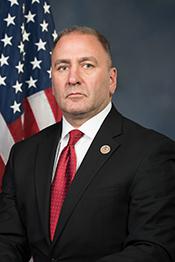

Current Status of Bill HR 2056

Bill HR 2056 is currently in the status of Passed in House since June 12, 2025. Bill HR 2056 was introduced during Congress 119 and was introduced to the House on March 11, 2025.  Bill HR 2056's most recent activity was Received in the Senate and Read twice and referred to the Committee on Homeland Security and Governmental Affairs. as of June 12, 2025

Bipartisan Support of Bill HR 2056

Total Number of Sponsors
18
Democrat Sponsors
0
Republican Sponsors
18
Unaffiliated Sponsors
0
Total Number of Cosponsors
1
Democrat Cosponsors
0
Republican Cosponsors
1
Unaffiliated Cosponsors
0

Policy Area and Potential Impact of Bill HR 2056

Primary Policy Focus

Immigration

Alternate Title(s) of Bill HR 2056

To require the District of Columbia to comply with federal immigration laws.

Comments

Latest Bills

To amend title III of the Public Health Service Act to ensure that Federally-qualified health centers are not required to pay more than the 340B ceiling price for covered outpatient drugs at the time of purchase.
Bill HR 7391February 11, 2026
To amend the Consolidated Farm and Rural Development Act to reauthorize certain water infrastructure grants, and for other purposes.
Bill HR 7476February 11, 2026
To direct the Administrator of the Federal Emergency Management Agency to submit a monthly report on the status of all projects and activities funded through the Disaster Relief Fund, and for other purposes.
Bill HR 7461February 11, 2026
Electing a Member to a certain standing committee of the House of Representatives.
Bill HRES 1048February 11, 2026
To amend the Internal Revenue Code of 1986 to allow certain distributions from long-term qualified tuition programs for first home purchases, and for other purposes.
Bill HR 7468February 11, 2026
To authorize civil actions against institutions of higher education and athletic associations that negligently or recklessly permit a biologically male student athlete to compete in an athletic competition intended exclusively for female student athletes, resulting in harm.
Bill HR 7368February 11, 2026
ROUTE Act
Bill HR 6642February 11, 2026
To amend section 477 of the Social Security Act to increase the maximum education and training voucher amount and provide greater support for foster youth pursuing postsecondary education.
Bill HR 7463February 11, 2026
Recognizing the cultural and historical significance of Mardi Gras and the celebration's origins in Mobile, Alabama.
Bill HRES 1051February 11, 2026
Home School Graduation Recognition Act
Bill HR 6392February 11, 2026
District of Columbia Federal Immigration Compliance Act
Bill S 1522May 22, 2025
Providing for consideration of the bill (H.R. 884) to prohibit individuals who are not citizens of the United States from voting in elections in the District of Columbia and to repeal the Local Resident Voting Rights Amendment Act of 2022; providing for consideration of the bill (H.R. 2056) to require the District of Columbia to comply with federal immigration laws; providing for consideration of the bill (H.R. 2096) to restore the right to negotiate matters pertaining to the discipline of law enforcement officers of the District of Columbia through collective bargaining, to restore the statute of limitations for bringing disciplinary cases against members or civilian employees of the Metropolitan Police Department of the District of Columbia, and for other purposes; and providing for consideration of the bill (S. 331) to amend the Controlled Substances Act with respect to the scheduling of fentanyl-related substances, and for other purposes.
Bill HRES 489June 30, 2025