0
0

To require the Federal Communications Commission to auction spectrum in the band between 1.3 gigahertz and 13.2 gigahertz, and for other purposes.

1/29/2025, 9:05 AM

Summary of Bill HR 651

Bill 119 HR 651, also known as the "Spectrum Auction Act," is a piece of legislation that aims to require the Federal Communications Commission (FCC) to auction off spectrum in the band between 1.3 gigahertz and 13.2 gigahertz. This spectrum is valuable for telecommunications companies as it can be used for a variety of purposes, including expanding wireless networks and improving internet connectivity.

The bill is designed to promote competition in the telecommunications industry by making more spectrum available for auction, allowing smaller companies to acquire the necessary resources to compete with larger corporations. By auctioning off this spectrum, the government can also generate revenue that can be used for other purposes.

In addition to requiring the FCC to auction off the specified spectrum, the bill also includes provisions for ensuring that the auction process is fair and transparent. This includes guidelines for how the spectrum should be allocated and rules for preventing anti-competitive behavior. Overall, the Spectrum Auction Act aims to promote innovation and competition in the telecommunications industry by making more spectrum available for auction. It also seeks to generate revenue for the government through the auction process.

Congressional Summary of HR 651

Spectrum Pipeline Act of 2025

This bill renews the authority of the Federal Communications Commission (FCC) to auction licenses for the use of radio frequency spectrum, and requires some frequencies currently used by the federal government to be reallocated to permit use by private entities.

Specifically, the bill reauthorizes the FCC’s use of competitive bidding (i.e., auctions) to grant licenses for the use of specific frequencies. (The FCC’s auction authority must be renewed by Congress periodically. It expired on March 9, 2023, and has not been renewed.)

Further, the bill directs the National Telecommunications and Information Administration to identify frequencies currently designated for use by the federal government that may be reallocated to permit use by private entities either exclusively or on a shared basis. At least half of the spectrum identified for reallocation must be allocated to commercial use (including commercial wireless use), and licenses in this category must be auctioned by the FCC within a specified time frame.

A separate portion of the spectrum must be allocated to unlicensed use. (Unlicensed frequencies are commonly used to support Wi-Fi, connected appliances, wearable consumer devices, and other electronics.) 

The bill also makes certain changes to the process for compensating federal entities that relocate to new frequencies under a spectrum reallocation plan. The bill shortens the time frame for congressional review of payments to these entities, and permits such payments to be used to cover the cost of replacing existing systems and equipment with state-of-the-art upgrades.

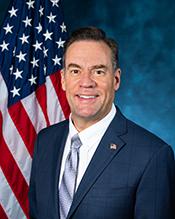
Current Status of Bill HR 651

Bill HR 651 is currently in the status of Bill Introduced since January 23, 2025. Bill HR 651 was introduced during Congress 119 and was introduced to the House on January 23, 2025.  Bill HR 651's most recent activity was Referred to the House Committee on Energy and Commerce. as of January 23, 2025

Bipartisan Support of Bill HR 651

Total Number of Sponsors
1
Democrat Sponsors
0
Republican Sponsors
1
Unaffiliated Sponsors
0
Total Number of Cosponsors
1
Democrat Cosponsors
0
Republican Cosponsors
1
Unaffiliated Cosponsors
0

Policy Area and Potential Impact of Bill HR 651

Primary Policy Focus

Alternate Title(s) of Bill HR 651

To require the Federal Communications Commission to auction spectrum in the band between 1.3 gigahertz and 13.2 gigahertz, and for other purposes.

Comments

Latest Bills

To amend title III of the Public Health Service Act to ensure that Federally-qualified health centers are not required to pay more than the 340B ceiling price for covered outpatient drugs at the time of purchase.
Bill HR 7391February 11, 2026
To amend the Consolidated Farm and Rural Development Act to reauthorize certain water infrastructure grants, and for other purposes.
Bill HR 7476February 11, 2026
To direct the Administrator of the Federal Emergency Management Agency to submit a monthly report on the status of all projects and activities funded through the Disaster Relief Fund, and for other purposes.
Bill HR 7461February 11, 2026
Electing a Member to a certain standing committee of the House of Representatives.
Bill HRES 1048February 11, 2026
To amend the Internal Revenue Code of 1986 to allow certain distributions from long-term qualified tuition programs for first home purchases, and for other purposes.
Bill HR 7468February 11, 2026
To authorize civil actions against institutions of higher education and athletic associations that negligently or recklessly permit a biologically male student athlete to compete in an athletic competition intended exclusively for female student athletes, resulting in harm.
Bill HR 7368February 11, 2026
ROUTE Act
Bill HR 6642February 11, 2026
To amend section 477 of the Social Security Act to increase the maximum education and training voucher amount and provide greater support for foster youth pursuing postsecondary education.
Bill HR 7463February 11, 2026
Recognizing the cultural and historical significance of Mardi Gras and the celebration's origins in Mobile, Alabama.
Bill HRES 1051February 11, 2026
Home School Graduation Recognition Act
Bill HR 6392February 11, 2026