0
0

To amend chapter 8 of title 5, United States Code, to provide that major rules of the executive branch shall have no force or effect unless a joint resolution of approval is enacted into law.

1/16/2025, 9:06 AM

Summary of Bill HR 142

Bill 119 hr 142, also known as the Regulations from the Executive in Need of Scrutiny (REINS) Act, aims to amend chapter 8 of title 5, United States Code. The main purpose of this bill is to require that major rules created by the executive branch must be approved by a joint resolution of Congress before they can take effect.

Under the REINS Act, any major rule proposed by the executive branch would have to be submitted to Congress for approval. A major rule is defined as any regulation that has an annual economic impact of $100 million or more, has a significant impact on the economy, or imposes a major cost on individuals or businesses.

If Congress does not approve the major rule through a joint resolution within a certain timeframe, typically 70 legislative days, the rule would not be able to take effect. This would give Congress more oversight and control over the regulations created by the executive branch. Supporters of the REINS Act argue that it would help to prevent overreach by the executive branch and ensure that major regulations are thoroughly reviewed by Congress before being implemented. Critics, however, are concerned that the bill could hinder the ability of the executive branch to effectively regulate important issues. Overall, the REINS Act seeks to increase transparency and accountability in the regulatory process by requiring congressional approval for major rules created by the executive branch.

Congressional Summary of HR 142

Regulations from the Executive in Need of Scrutiny Act of 2025

This bill revises provisions relating to congressional review of agency rulemaking.

Specifically, the bill establishes a congressional approval process for a major rule. A major rule may only take effect if Congress approves of the rule. A major rule is a rule that has resulted in or is likely to result in (1) an annual effect on the economy of $100 million or more; (2) a major increase in costs or prices for consumers, individual industries, government agencies, or geographic regions; or (3) significant adverse effects on competition, employment, investment, productivity, innovation, or the ability of U.S.-based enterprises to compete with foreign-based enterprises.

The bill generally preserves the current congressional review process for a nonmajor rule.

Current Status of Bill HR 142

Bill HR 142 is currently in the status of Bill Introduced since January 3, 2025. Bill HR 142 was introduced during Congress 119 and was introduced to the House on January 3, 2025.  Bill HR 142's most recent activity was Referred to the Committee on the Judiciary, and in addition to the Committees on Rules, and the Budget, for a period to be subsequently determined by the Speaker, in each case for consideration of such provisions as fall within the jurisdiction of the committee concerned. as of January 3, 2025

Bipartisan Support of Bill HR 142

Total Number of Sponsors
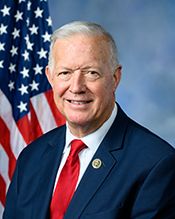
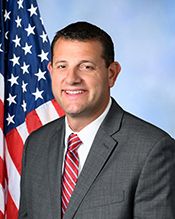
8
Democrat Sponsors
0
Republican Sponsors
8
Unaffiliated Sponsors
0
Total Number of Cosponsors
364
Democrat Cosponsors
0
Republican Cosponsors
364
Unaffiliated Cosponsors
0

Policy Area and Potential Impact of Bill HR 142

Primary Policy Focus

Alternate Title(s) of Bill HR 142

To amend chapter 8 of title 5, United States Code, to provide that major rules of the executive branch shall have no force or effect unless a joint resolution of approval is enacted into law.

Comments

Latest Bills

To amend title III of the Public Health Service Act to ensure that Federally-qualified health centers are not required to pay more than the 340B ceiling price for covered outpatient drugs at the time of purchase.
Bill HR 7391February 11, 2026
To amend the Consolidated Farm and Rural Development Act to reauthorize certain water infrastructure grants, and for other purposes.
Bill HR 7476February 11, 2026
To direct the Administrator of the Federal Emergency Management Agency to submit a monthly report on the status of all projects and activities funded through the Disaster Relief Fund, and for other purposes.
Bill HR 7461February 11, 2026
Electing a Member to a certain standing committee of the House of Representatives.
Bill HRES 1048February 11, 2026
To amend the Internal Revenue Code of 1986 to allow certain distributions from long-term qualified tuition programs for first home purchases, and for other purposes.
Bill HR 7468February 11, 2026
To authorize civil actions against institutions of higher education and athletic associations that negligently or recklessly permit a biologically male student athlete to compete in an athletic competition intended exclusively for female student athletes, resulting in harm.
Bill HR 7368February 11, 2026
ROUTE Act
Bill HR 6642February 11, 2026
To amend section 477 of the Social Security Act to increase the maximum education and training voucher amount and provide greater support for foster youth pursuing postsecondary education.
Bill HR 7463February 11, 2026
Recognizing the cultural and historical significance of Mardi Gras and the celebration's origins in Mobile, Alabama.
Bill HRES 1051February 11, 2026
Home School Graduation Recognition Act
Bill HR 6392February 11, 2026