0
0

Fire Department Repayment Act of 2025

3/8/2025, 9:06 AM

Summary of Bill HR 345

Bill 119 HR 345, also known as the Reciprocal Fire Suppression Cost Share Agreements Standardization Act, aims to establish a standardized framework for reciprocal fire suppression cost share agreements. These agreements are made between different jurisdictions to ensure that the costs of fighting wildfires are shared fairly and efficiently.

The bill requires that these agreements adhere to certain guidelines, such as clearly outlining the responsibilities of each party, establishing a fair cost-sharing formula, and ensuring that resources are allocated effectively during firefighting efforts. By standardizing these agreements, the bill aims to streamline the process of coordinating firefighting efforts across different jurisdictions and reduce confusion and disputes over cost-sharing arrangements.

In addition to standardizing reciprocal fire suppression cost share agreements, the bill also includes provisions for other purposes related to wildfire prevention and response. These may include measures to improve coordination between federal, state, and local agencies, enhance training and resources for firefighting personnel, and promote the use of best practices in wildfire management. Overall, Bill 119 HR 345 seeks to improve the efficiency and effectiveness of wildfire response efforts by establishing clear guidelines for cost-sharing agreements and promoting collaboration between different jurisdictions. By addressing these issues, the bill aims to better protect communities and natural resources from the devastating impacts of wildfires.

Congressional Summary of HR 345

Fire Department Repayment Act of 2025

This bill requires standard operating procedures for reciprocal fire suppression cost share agreements, which are agreements between federal, state, and local governments to share the costs of suppressing wildfires that occur across multiple jurisdictions. 

The Departments of Agriculture, the Interior, Homeland Security, and Defense must establish standard operating procedures relating to payment timelines for fire suppression cost share agreements established under the Reciprocal Fire Protection Act. The departments must also review each agreement that is in operation within a year of this bill's enactment and modify an agreement as necessary to comply with the standard operating procedures.

The standard operating procedures must require that (1) each fire suppression cost share agreement be aligned with each of the cooperative fire protection agreements applicable to the entity subject to such fire suppression cost share agreement, and (2) the federal paying entity reimburse a local fire department if the fire department submits an invoice in accordance with cost settlement procedures.
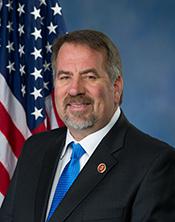
Current Status of Bill HR 345

Bill HR 345 is currently in the status of Bill Introduced since January 13, 2025. Bill HR 345 was introduced during Congress 119 and was introduced to the House on January 13, 2025.  Bill HR 345's most recent activity was Referred to the Subcommittee on Forestry and Horticulture. as of February 14, 2025

Bipartisan Support of Bill HR 345

Total Number of Sponsors
7
Democrat Sponsors
7
Republican Sponsors
0
Unaffiliated Sponsors
0
Total Number of Cosponsors
11
Democrat Cosponsors
4
Republican Cosponsors
7
Unaffiliated Cosponsors
0

Policy Area and Potential Impact of Bill HR 345

Primary Policy Focus

Alternate Title(s) of Bill HR 345

To require the standardization of reciprocal fire suppression cost share agreements, and for other purposes.

Comments

Latest Bills

To authorize the Secretary of Education, in collaboration with the Secretary of Health and Human Services, to establish an interagency advisory Commission on Advancing Restorative Justice in Elementary and Secondary Education, and for other purposes.
Bill HR 8360April 17, 2026
To amend the Higher Education Act of 1965 to remove all adverse credit history related to a loan from the credit history of a borrower who has rehabilitated the loan.
Bill HR 8361April 17, 2026
To reauthorize the YouthBuild program, and for other purposes.
Bill HR 8333April 17, 2026
To raise the Foreign Service mandatory retirement age by aligning it with the Social Security Full Retirement Age, and for other purposes.
Bill HR 8346April 17, 2026
To amend the FISA Amendments Act of 2008 to extend the authorities of title VII of the Foreign Intelligence Surveillance Act of 1978 through April 30, 2026, and for other purposes.
Bill HR 8322April 17, 2026
To amend title II of the Social Security Act to repeal the retirement earnings test, and for other purposes.
Bill HR 8344April 17, 2026
To amend section 133 of title 23, United States Code, to remove a certain State funding set-aside for transportation alternative programs, and for other purposes.
Bill HR 8349April 17, 2026
To amend title XI of the Social Security Act to require the Center for Medicare and Medicaid Innovation to test a model to reduce chronic diseases by using accountable produce is medicine.
Bill HR 8355April 17, 2026
To amend the Federal Food, Drug, and Cosmetic Act to enhance drug manufacturing amount information reporting, and for other purposes.
Bill HR 8339April 17, 2026
Supporting the designation of the week of April 11 through April 17, 2026, as "Black Maternal Health Week", founded by Black Mamas Matter Alliance, Inc. (BMMA), to bring national attention to the maternal and reproductive health crisis in the United States and the importance of reducing maternal mortality and morbidity among Black women and birthing people.
Bill HRES 1183April 17, 2026
Breaking the Gridlock Act
Bill HR 1834February 11, 2026